
RAAMAH. Thunder. (1.) One of the sons of Cush (Gen. 10:7). (2.) A country which traded with Tyre (Ezek. 27:22).
RAAMIAH. Thunder of the Lord, one of the princes who returned from the Exile (Neh. 7:7); called also Reelaiah (Ezra 2:2).
RABBAH. Or Rab’bath, great. (1.) “Rabbath of the children of Ammon,” the chief city of the Ammonites, among the eastern hills, some 20 miles east of the Jordan, on the southern of the two streams which united with the Jabbok. Here the bedstead of Og was preserved (Deut. 3:11), perhaps as a trophy of some victory gained by the Ammonites over the king of Bashan. After David had subdued all their allies in a great war, he sent Joab with a strong force to take their city. For two years it held out against its assailants. It was while his army was engaged in this protracted siege that David was guilty of that deed of shame which left a blot on his character and cast a gloom over the rest of his life. At length, having taken the “royal city” (or the “city of waters,” 2 Sam. 12:27, i.e., the lower city on the river, as distinguished from the citadel), Joab sent for David to direct the final assault (11:1; 12:26-31). The city was given up to plunder, and the people were ruthlessly put to death, and “thus did he with all the cities of the children of Ammon.” The destruction of Rabbath was the last of David’s conquests. His kingdom now reached its farthest limits (2 Sam. 8:1-15; 1 Chr. 18:1-15). The capture of this city is referred to by Amos (1:14), Jeremiah (49:2, 3), and Ezekiel (21:20; 25:5). (2.) A city in the hill country of Judah (Josh. 15:60), possibly the ruin Rubba, six miles north-east of Beit-Jibrin.
RABBI. My master, a title of dignity given by the Jews to their doctors of the law and their distinguished teachers. It is sometimes applied to Christ (Matt. 23:7, 8; Mark 9:5 (R.V.); John 1:38, 49; 3:2; 6:25, etc.); also to John (3:26).
RABBONI. (id.) occurs only twice in the New Testament (Mark 10:51, A.V., “Lord,” R.V., “Rabboni;” John 20:16). It was the most honourable of all the titles.
RABMAG. Assyrian Rab-mugi, “chief physician,” “who was attached to the king (Jer. 39:3, 13), the title of one of Sennacherib’s officers sent with messages to Hezekiah and the people of Jerusalem (2 Kings 18:17-19:13; Isa. 36:12-37:13) demanding the surrender of the city. He was accompanied by a “great army;” but his mission was unsuccessful.
RABSARIS. Chief of the Heads, one of the three officers whom Sennacherib sent from Lachish with a threatening message to Jerusalem (2 Kings 18:17; Jer. 39:3, 13).
RABSHAKEH. Chief of the princes, the name given to the chief cup-bearer or the vizier of the Assyrian court; one of Sennacherib’s messengers to Hezekiah. See the speech he delivered, in the Hebrew language, in the hearing of all the people, as he stood near the wall on the north side of the city (2 Kings 18:17-37). He and the other envoys returned to their master and reported that Hezekiah and his people were obdurate, and would not submit.
RACA. Vain, empty, worthless, only found in Matt. 5:22. The Jews used it as a word of contempt. It is derived from a root meaning “to spit.”
RACHAL. Traffic, a town in the tribe of Judah, to which David sent presents from the spoils of his enemies (1 Sam. 30:29).
RACHEL. Ewe, “the daughter”, “the somewhat petulant, peevish, and self-willed though beautiful younger daughter” of Laban, and one of Jacob’s wives (Gen. 29:6, 28). He served Laban fourteen years for her, so deep was Jacob’s affection for her. She was the mother of Joseph (Gen. 30:22-24). Afterwards, on Jacob’s departure from Mesopotamia, she took with her her father’s teraphim (31:34, 35). As they journeyed on from Bethel, Rachel died in giving birth to Benjamin (35:18, 19), and was buried “in the way to Ephrath, which is Bethlehem. And Jacob set a pillar upon her grave”. Her sepulchre is still regarded with great veneration by the Jews. Its traditional site is about half a mile from Jerusalem. This name is used poetically by Jeremiah (31:15-17) to denote God’s people mourning under their calamities. This passage is also quoted by Matthew as fulfilled in the lamentation at Bethlehem on account of the slaughter of the infants there at the command of Herod (Matt. 2:17, 18).
RAGUEL. Friend of God, (Num. 10:29)=Reuel (q.v.), Ex. 2:18, the father-in-law of Moses, and probably identical with Jethro (q.v.).
RAHAB. Insolence; pride, a poetical name applied to Egypt in Ps. 87:4; 89:10; Isa. 51:9, as “the proud one.” Rahab, (Heb. Rahab; i.e., “broad,” “large”). When the Hebrews were encamped at Shittim, in the “Arabah” or Jordan valley opposite Jericho, ready to cross the river, Joshua, as a final preparation, sent out two spies to “spy the land.” After five days they returned, having swum across the river, which at this season, the month Abib, overflowed its banks from the melting of the snow on Lebanon. The spies reported how it had fared with them (Josh. 2:1-7). They had been exposed to danger in Jericho, and had been saved by the fidelity of Rahab the harlot, to whose house they had gone for protection. When the city of Jericho fell (6:17-25), Rahab and her whole family were preserved according to the promise of the spies, and were incorporated among the Jewish people. She afterwards became the wife of Salmon, a prince of the tribe of Judah (Ruth 4:21; 1 Chr. 2:11; Matt. 1:5). “Rahab’s being asked to bring out the spies to the soldiers (Josh. 2:3) sent for them, is in strict keeping with Eastern manners, which would not permit any man to enter a woman’s house without her permission. The fact of her covering the spies with bundles of flax which lay on her house-roof (2:6) is an ‘undesigned coincidence’ which strictly corroborates the narrative. It was the time of the barley harvest, and flax and barley are ripe at the same time in the Jordan valley, so that the bundles of flax stalks might have been expected to be drying just then” (Geikie’s Hours, etc., ii., 390).
RAHAM. Merciful, one of the descendants of Caleb, the son of Hezron (1 Chr. 2:44).
 RAIN. There are three Hebrew words used to denote the rains of different seasons, (1.) Yoreh (Hos. 6:3), or moreh (Joel 2:23), denoting the former or the early rain. (2.) Melqosh, the “latter rain” (Prov. 16:15). (3.) Geshem, the winter rain, “the rains.” The heavy winter rain is mentioned in Gen. 7:12; Ezra 10:9; Cant. 2:11. The “early” or “former” rains commence in autumn in the latter part of October or beginning of November (Deut. 11:14; Joel 2:23; comp. Jer. 3:3), and continue to fall heavily for two months. Then the heavy “winter rains” fall from the middle of December to March. There is no prolonged fair weather in Palestine between October and March. The “latter” or spring rains fall in March and April, and serve to swell the grain then coming to maturity (Deut. 11:14; Hos. 6:3). After this there is ordinarily no rain, the sky being bright and cloudless till October or November. Rain is referred to symbolically in Deut. 32:2; Ps. 72:6; Isa. 44:3, 4; Hos. 10:12.
 RAINBOW. Caused by the reflection and refraction of the rays of the sun shining on falling rain. It was appointed as a witness of the divine faithfulness (Gen. 9:12-17). It existed indeed before, but it was then constituted as a sign of the covenant. Others, however (as Delitzsch, Commentary on Pentateuch), think that it “appeared then for the first time in the vault and clouds of heaven.” It is argued by those holding this opinion that the atmosphere was differently constituted before the Flood. It is referred to three other times in Scripture (Ezek. 1:27, 28; Rev. 4:1-3; 10:1).
RAKKATH. Shore-town, a “fenced city” of the tribe of Naphtali (Josh. 19:35). The old name of Tiberias, according to the Rabbins.
RAKKON. A place upon the shore, a town belonging to Dan (Josh. 19:46). It is now Tell er-Rakkeit, 6 miles north of Joppa, on the sea-shore, near the mouth of the river ‘Aujeh, i.e., “yellow water.”
RAM. Exalted. (1.) The son of Hezron, and one of the ancestors of the royal line (Ruth 4:19). The margin of 1 Chr. 2:9, also Matt. 1:3, 4 and Luke 3:33, have “Aram.” (2.) One of the sons of Jerahmeel (1 Chr. 2:25, 27). (3.) A person mentioned in Job 32:2 as founder of a clan to which Elihu belonged. The same as Aram of Gen. 22:21.
RAMA. (Matt. 2:18), the Greek form of Ramah. (1.) A city first mentioned in Josh. 18:25, near Gibeah of Benjamin. It was fortified by Baasha, king of Israel (1 Kings 15:17-22; 2 Chr. 16:1-6). Asa, king of Judah, employed Benhadad the Syrian king to drive Baasha from this city (1 Kings 15:18, 20). Isaiah (10:29) refers to it, and also Jeremiah, who was once a prisoner there among the other captives of Jerusalem when it was taken by Nebuchadnezzar (Jer. 39:8-12; 40:1). Rachel, whose tomb lies close to Bethlehem, is represented as weeping in Ramah (Jer. 31:15) for her slaughtered children. This prophecy is illustrated and fulfilled in the re-awakening of Rachel’s grief at the slaughter of the infants in Bethlehem (Matt. 2:18). It is identified with the modern village of er-Ram, between Gibeon and Beeroth, about 5 miles due north of Jerusalem. (See SAMUEL.) (2.) A town identified with Rameh, on the border of Asher, about 13 miles south-east of Tyre, “on a solitary hill in the midst of a basin of green fields” (Josh. 19:29). (3.) One of the “fenced cities” of Naphtali (Josh. 19:36), on a mountain slope, about seven and a half miles west-south-west of Safed, and 15 miles west of the north end of the Sea of Galilee, the present large and well-built village of Rameh. (4.) The same as Ramathaim-zophim (q.v.), a town of Mount Ephraim (1 Sam. 1:1, 19). (5.) The same as Ramoth-gilead (q.v.), 2 Kings 8:29; 2 Chr. 22:6.
RAMATH OF THE SOUTH. (Heb. Ramath-negeb). The Heb. negeb is the general designation for south or south-west of Judah. This was one of the towns of Simeon (Josh. 19:8). It is the same as “south Ramoth” (1 Sam. 30:27; R.V., “Ramoth of the south”). Its site is doubtful. Some have thought it another name for Baalath-beer.
RAMATHAIM-ZOPHIM. The two heights of the Zophites or of the watchers (only in 1 Sam. 1:1), “in the land of Zuph” (9:5). Ramathaim is another name for Ramah (4). One of the Levitical families descended from Kohath, that of Zuph or Zophai (1 Chr. 6:26, 35), had a district assigned to them in Ephraim, which from this circumstance was called “the land of Zuph,” and hence the name of the town, “Zophim.” It was the birth-place of Samuel and the seat of his authority (1 Sam. 2:11; 7:17). It is frequently mentioned in the history of that prophet and of David (15:34; 16:13; 19:18-23). Here Samuel died and was buried (25:1). This town has been identified with the modern Neby Samwil (“the prophet Samuel”), about 4 or 5 miles north-west of Jerusalem. But there is no certainty as to its precise locality. Some have supposed that it may be identical with Arimathea of the New Testament.
RAMATHITE. The designation given to Shimei, the manager of David’s vineyard (1 Chr. 27:27).
RAMATH-LEHI. Elevation of Lehi, or the jawbone height; i.e., the Ramah of Lehi (Judg. 15:15-17). The phrase “in the jaw,” ver. 19, Authorized Version, is in the margin, also in the Revised Version, “in Lehi.” Here Samson slew a thousand Philistines with a jawbone.
RAMATH-MIZPEH. The height of Mizpeh or of the watch-tower (Josh. 13:26), a place mentioned as one of the limits of Gad. There were two Mizpehs on the east of the Jordan. This was the Mizpeh where Jacob and Laban made a covenant, “Mizpeh of Gilead,” called also Galeed and Jegar-sahadutha. It has been identified with the modern es-Salt, where the roads from Jericho and from Shechem to Damascus unite, about 25 miles east of the Jordan and 13 south of the Jabbok.
RAMESES. “the land of” (Gen. 47:11), was probably “the land of Goshen” (q.v.) 45:10. After the Hebrews had built Rameses, one of the “treasure cities,” it came to be known as the “land” in which that city was built. The city bearing this name (Ex. 12:37) was probably identical with Zoan, which Rameses II. (“son of the sun”) rebuilt. It became his special residence, and ranked next in importance and magnificance to Thebes. Huge masses of bricks, made of Nile mud, sun-dried, some of them mixed with stubble, possibly moulded by Jewish hands, still mark the site of Rameses. This was the general rendezvous of the Israelites before they began their march out of Egypt. Called also Raamses (Ex. 1:11).
RAMOTH. Heights. A Levitical city in the tribe of Issachar (1 Sam. 30:27; 1 Chr. 6:73), the same as Jarmuth (Josh. 21:29) and Remeth (q.v.), 19:21.
RAMOTH-GILEAD. Heights of Gilead, a city of refuge on the east of Jordan; called “Ramoth in Gilead” (Deut. 4:43; Josh. 20:8; 21:38). Here Ahab, who joined Jehoshaphat in an endeavour to rescue it from the hands of the king of Syria, was mortally wounded (1 Kings 22:1-36). A similar attempt was afterwards made by Ahaziah and Joram, when the latter was wounded (2 Kings 8:28). In this city Jehu, the son of Jehoshaphat, was anointed by one of the sons of the prophets (9:1, 4). It has with probability been identified with Reimun, on the northern slope of the Jabbok, about 5 miles west of Jerash or Gerasa, one of the cities of Decapolis. Others identify it with Gerosh, about 25 miles north-east of es-Salt, with which also many have identified it.
RAPHA. Tall. (1.) A Benjamite, the son of Binea (1 Chr. 8:2, 37), a descendant of Saul. (2.) Margin of 1 Chr. 20:4, 6, where “giant” is given in the text.
RAPHU. Healed, a Benjamite, whose son Palti was one of the twelve spies (Num. 13:9).
REBA. Fourth, one of the Midianite chiefs slain by the Israelites in the wilderness (Num. 31:8; Josh. 13:21).
REBEKAH. A noose, the daughter of Bethuel, and the wife of Isaac (Gen. 22:23; 24:67). The circumstances under which Abraham’s “steward” found her at the “city of Nahor,” in Padan-aram, are narrated in Gen. 24-27. “She can hardly be regarded as an amiable woman. When we first see her she is ready to leave her father’s house for ever at an hour’s notice; and her future life showed not only a full share of her brother Laban’s duplicity, but the grave fault of partiality in her relations to her children, and a strong will, which soon controlled the gentler nature of her husband.” The time and circumstances of her death are not recorded, but it is said that she was buried in the cave of Machpelah (Gen. 49:31).
RECHAB. Horseman, or chariot. (1.) One of Ishbosheth’s “captains of bands” or leaders of predatory troops (2 Sam. 4:2). (2.) The father of Jehonadab, who was the father of the Rechabites (2 Kings 10:15, 23; Jer. 35:6-19).
RECHABITES. The descendants of Rechab through Jonadab or Jehonadab. They belonged to the Kenites, who accompanied the children of Israel into Palestine, and dwelt among them. Moses married a Kenite wife (Judg. 1:16), and Jael was the wife of “Heber the Kenite” (4:17). Saul also showed kindness to the Kenites (1 Sam. 15:6). The main body of the Kenites dwelt in cities, and adopted settled habits of life (30:29); but Jehonadab forbade his descendants to drink wine or to live in cities. They were commanded to lead always a nomad life. They adhered to the law laid down by Jonadab, and were noted for their fidelity to the old-established custom of their family in the days of Jeremiah (35); and this feature of their character is referred to by the prophet for the purpose of giving point to his own exhortation. They are referred to in Neh. 3:14 and 1 Chr. 2:55. Dr. Wolff (1839) found in Arabia, near Mecca, a tribe claiming to be descendants of Jehonadab; and recently a Bedouin tribe has been found near the Dead Sea who also profess to be descendants of the same Kenite chief.
RECONCILIATION. A change from enmity to friendship. It is mutual, i.e., it is a change wrought in both parties who have been at enmity. (1.) In Col. 1:21, 22, the word there used refers to a change wrought in the personal character of the sinner who ceases to be an enemy to God by wicked works, and yields up to him his full confidence and love. In 2 Cor. 5:20 the apostle beseeches the Corinthians to be “reconciled to God”, i.e., to lay aside their enmity. (2.) Rom. 5:10 refers not to any change in our disposition toward God, but to God himself, as the party reconciled. Romans 5:11 teaches the same truth. From God we have received “the reconciliation” (R.V.), i.e., he has conferred on us the token of his friendship. So also 2 Cor. 5:18, 19 speaks of a reconciliation originating with God, and consisting in the removal of his merited wrath. In Eph. 2:16 it is clear that the apostle does not refer to the winning back of the sinner in love and loyalty to God, but to the restoration of God’s forfeited favour. This is effected by his justice being satisfied, so that he can, in consistency with his own nature, be favourable toward sinners. Justice demands the punishment of sinners. The death of Christ satisfies justice, and so reconciles God to us. This reconciliation makes God our friend, and enables him to pardon and save us.
 RED SEA. The sea so called extends along the west coast of Arabia for about 1,400 miles, and separates Asia from Africa. It is connected with the Indian Ocean, of which it is an arm, by the Strait of Bab-el-Mandeb. At a point (Ras Mohammed) about 200 miles from its nothern extremity it is divided into two arms, that on the east called the AElanitic Gulf, now the Bahr el-‘Akabah, about 100 miles long by 15 broad, and that on the west the Gulf of Suez, about 150 miles long by about 20 broad. This branch is now connected with the Mediterranean by the Suez Canal. Between these two arms lies the Sinaitic Peninsula. The Hebrew name generally given to this sea is Yam Suph. This word suph means a woolly kind of sea-weed, which the sea casts up in great abundance on its shores. In these passages, Ex. 10:19; 13:18; 15:4, 22; 23:31; Num. 14:25, etc., the Hebrew name is always translated “Red Sea,” which was the name given to it by the Greeks. The origin of this name (Red Sea) is uncertain. Some think it is derived from the red colour of the mountains on the western shore; others from the red coral found in the sea, or the red appearance sometimes given to the water by certain zoophytes floating in it. In the New Testament (Acts 7:36; Heb. 11:29) this name is given to the Gulf of Suez. This sea was also called by the Hebrews Yam-mitstraim, i.e., “the Egyptian sea” (Isa. 11:15), and simply Ha-yam, “the sea” (Ex. 14:2, 9, 16, 21, 28; Josh. 24:6, 7; Isa. 10:26, etc.). The great historical event connected with the Red Sea is the passage of the children of Israel, and the overthrow of the Egyptians, to which there is frequent reference in Scripture (Ex. 14, 15; Num. 33:8; Deut. 11:4; Josh. 2:10; Judg. 11:16; 2 Sam. 22:16; Neh. 9:9-11; Ps. 66:6; Isa. 10:26; Acts 7:36, etc.).
REDEMPTION. The purchase back of something that had been lost, by the payment of a ransom. The Greek word so rendered is apolutrosis, a word occurring nine times in Scripture, and always with the idea of a ransom or price paid, i.e., redemption by a lutron (see Matt. 20:28; Mark 10:45). There are instances in the LXX. Version of the Old Testament of the use of lutron in man’s relation to man (Lev. 19:20; 25:51; Ex. 21:30; Num. 35:31, 32; Isa. 45:13; Prov. 6:35), and in the same sense of man’s relation to God (Num. 3:49; 18:15). There are many passages in the New Testament which represent Christ’s sufferings under the idea of a ransom or price, and the result thereby secured is a purchase or redemption (comp. Acts 20:28; 1 Cor. 6:19, 20; Gal. 3:13; 4:4, 5; Eph. 1:7; Col. 1:14; 1 Tim. 2:5, 6; Titus 2:14; Heb. 9:12; 1 Pet. 1:18, 19; Rev. 5:9). The idea running through all these texts, however various their reference, is that of payment made for our redemption. The debt against us is not viewed as simply cancelled, but is fully paid. Christ’s blood or life, which he surrendered for them, is the “ransom” by which the deliverance of his people from the servitude of sin and from its penal consequences is secured. It is the plain doctrine of Scripture that “Christ saves us neither by the mere exercise of power, nor by his doctrine, nor by his example, nor by the moral influence which he exerted, nor by any subjective influence on his people, whether natural or mystical, but as a satisfaction to divine justice, as an expiation for sin, and as a ransom from the curse and authority of the law, thus reconciling us to God by making it consistent with his perfection to exercise mercy toward sinners” (Hodge’s Systematic Theology).
REELAIAH. One of the 12 chiefs who returned with Zerubbabel (Ezra 2:2 parallel Neh. 7:7). In the passage in Neh/ the name is Raamiah”, and in 1 Esdras 5:8 “Resaias.” Which is the original, it is almost impossible to decide; “Reelaiah” seems preferable.
REFUGE, CITIES OF. Were six in number (Num. 35). (1.) On the west of Jordan were (1) Kadesh, in Naphtali; (2) Shechem, in Mount Ephraim; (3) Hebron, in Judah. (2.) On the east of Jordan were, (1) Golan, in Bashan; (2) Ramoth-Gilead, in Gad; and (3) Bezer, in Reuben.
REGEM. A Calebite, the son of Jahdai (1 Chr. 2:47), mentioned as the eponym of a Calebite family or clan.
REGEM-MELECH. Friend of the king, one of the two messengers sent by the exiled Jews to Jerusalem in the time of Darius (Zech. 7:2) to make inquiries at the temple.
REGENERATION. Only found in Matt. 19:28 and Titus 3:5. This word literally means a “new birth.” The Greek word so rendered (palingenesia) is used by classical writers with reference to the changes produced by the return of spring. In Matt. 19:28 the word is equivalent to the “restitution of all things” (Acts 3:21). In Titus 3:5 it denotes that change of heart elsewhere spoken of as a passing from death to life (1 John 3:14); becoming a new creature in Christ Jesus (2 Cor. 5:17); being born again (John 3:5); a renewal of the mind (Rom. 12:2); a resurrection from the dead (Eph. 2:6); a being quickened (2:1, 5). This change is ascribed to the Holy Spirit. It originates not with man but with God (John 1:12, 13; 1 John 2:29; 5:1, 4). As to the nature of the change, it consists in the implanting of a new principle or disposition in the soul; the impartation of spiritual life to those who are by nature “dead in trespasses and sins.” The necessity of such a change is emphatically affirmed in Scripture (John 3:3; Rom. 7:18; 8:7-9; 1 Cor. 2:14; Eph. 2:1; 4:21-24).
REHABIAH. Enlargement of the Lord, the son of Eliezer, and grandson of Moses (1 Chr. 23:17; 24:21).
REHOB. Street; broad place. (1.) The father of Hadadezer, king of Tobah (2 Sam. 8:3, 12). (2.) Neh. 10:11. (3.) The same, probably, as Beth-rehob (2 Sam. 10:6, 8; Judg. 18:28), a place in the north of Palestine (Num. 13:21). It is now supposed to be represented by the castle of Hunin, south-west of Dan, on the road from Hamath into Coele-Syria. (4.) A town of Asher (Josh. 19:28), to the east of Zidon. (5.) Another town of Asher (Josh. 19:30), kept possession of by the Canaanites (Judg. 1:31).
REHOBOAM. He enlarges the people, the successor of Solomon on the throne, and apparently his only son. He was the son of Naamah “the Ammonitess,” some well-known Ammonitish princess (1 Kings 14:21; 2 Chr. 12:13). He was forty-one years old when he ascended the throne, and he reigned seventeen years (B.C. 975-958). Although he was acknowledged at once as the rightful heir to the throne, yet there was a strongly-felt desire to modify the character of the government. The burden of taxation to which they had been subjected during Solomon’s reign was very oppressive, and therefore the people assembled at Shechem and demanded from the king an alleviation of their burdens. He went to meet them at Shechem, and heard their demands for relief (1 Kings 12:4). After three days, having consulted with a younger generation of courtiers that had grown up around him, instead of following the advice of elders, he answered the people haughtily (6-15). “The king hearkened not unto the people; for the cause was from the Lord” (comp. 11:31). This brought matters speedily to a crisis. The terrible cry was heard (comp. 2 Sam. 20:1): “What portion have we in David? Neither have we inheritance in the son of Jesse: To your tents, O Israel: Now see to thine own house, David” (1 Kings 12:16). And now at once the kingdom was rent in twain. Rehoboam was appalled, and tried concessions, but it was too late (18). The tribe of Judah, Rehoboam’s own tribe, alone remained faithful to him. Benjamin was reckoned along with Judah, and these two tribes formed the southern kingdom, with Jerusalem as its capital; while the northern ten tribes formed themselves into a separate kingdom, choosing Jeroboam as their king. Rehoboam tried to win back the revolted ten tribes by making war against them, but he was prevented by the prophet Shemaiah (21-24; 2 Chr. 11:1-4) from fulfilling his purpose. In the fifth year of Rehoboam’s reign, Shishak (q.v.), one of the kings of Egypt of the Assyrian dynasty, stirred up, no doubt, by Jeroboam his son-in-law, made war against him. Jerusalem submitted to the invader, who plundered the temple and virtually reduced the kingdom to the position of a vassal of Egypt (1 Kings 14:25, 26; 2 Chr. 12:5-9). A remarkable memorial of this invasion has been discovered at Karnac, in Upper Egypt, in certain sculptures on the walls of a small temple there. These sculptures represent the king, Shishak, holding in his hand a train of prisoners and other figures, with the names of the captured towns of Judah, the towns which Rehoboam had fortified (2 Chr. 11:5-12). The kingdom of Judah, under Rehoboam, sank more and more in moral and spiritual decay. “There was war between Rehoboam and Jeroboam all their days.” At length, in the fifty-eighth year of his age, Rehoboam “slept with his fathers, and was buried with his fathers in the city of David” (1 Kings 14:31). He was succeeded by his son Abijah.
REHOBOTH. Broad places. (1.) A well in Gerar dug by Isaac (Gen. 26:22), supposed to be in Wady er-Ruheibeh, about 20 miles south of Beersheba. (2.) An ancient city on the Euphrates (Gen. 36:37; 1 Chr. 1:48), “Rehoboth by the river.” (3.) Named among the cities of Asshur (Gen. 10:11). Probably, however, the words “rehoboth’ir” are to be translated as in the Vulgate and the margin of A.V., “the streets of the city,” or rather “the public square of the city”, i.e., of Nineveh.
REHUM. Merciful. (1.) One of “the children of the province” who returned from the Captivity (Ezra 2:2); the same as “Nehum” (Neh. 7:7). (2.) The “chancellor” of Artaxerxes, who sought to stir him up against the Jews (Ezra 4:8-24) and prevent the rebuilding of the walls and the temple of Jerusalem. (3.) A Levite (Neh. 3:17). (4.) Neh. 10:25. (5.) A priest (Neh. 12:3).
REI. Friendly, one who maintained true allegiance to King David (1 Kings 1:8) when Adonijah rebelled.
REKEM. Embroidered; variegated. (1.) One of the five Midianite kings whom the Israelites destroyed (Num. 31:8). (2.) One of the sons of Hebron (1 Chr. 2:43, 44). (3.) A town of Benjamin (Josh. 18:27).
REMALIAH. Adorned by the Lord, the father of Pekah, who conspired successfully against Pekahiah (2 Kings 15:25, 27, 30, 32, 37; Isa. 7:1, 4, 5, 9; 8:6).
REMETH. Another form of Ramah (q.v.) or Ramoth (1 Chr. 6:73; Josh. 19:21), and probably also of Jarmuth (Josh. 21:29).
REMNANT. The name Shear-Jashub (“a remnant will return, ” Isa. 7:3 ), often thought to be seminal to the prophets’ thought on remnant, is, even in context, ambiguous in meaning. Did the expression portend misfortune, or did it convey that all was not lost? The expression, “a remnant will return, ” when applied later to Israel, became, even if marginally, a message of hope ( Isa. 10:20-23 ; 37:31-32 ; = 2 Kings 19:30-31 ).
REMPHAN. (Acts 7:43; R.V., “Rephan”). In Amos 5:26 the Heb. Chiun (q.v.) is rendered by the LXX. “Rephan,” and this name is adopted by Luke in his narrative of the Acts. These names represent the star-god Saturn or Moloch.
REPENTANCE. There are three Greek words used in the New Testament to denote repentance. (1.) The verb metamelomai is used of a change of mind, such as to produce regret or even remorse on account of sin, but not necessarily a change of heart. This word is used with reference to the repentance of Judas (Matt. 27:3). (2.) Metanoeo, meaning to change one’s mind and purpose, as the result of after knowledge. This verb, with (3.) the cognate noun metanoia, is used of true repentance, a change of mind and purpose and life, to which remission of sin is promised. Evangelical repentance consists of (1) a true sense of one’s own guilt and sinfulness; (2) an apprehension of God’s mercy in Christ; (3) an actual hatred of sin (Ps. 119:128; Job 42:5, 6; 2 Cor. 7:10) and turning from it to God; and (4) a persistent endeavour after a holy life in a walking with God in the way of his commandments. The true penitent is conscious of guilt (Ps. 51:4, 9), of pollution (51:5, 7, 10), and of helplessness (51:11; 109:21, 22). Thus he apprehends himself to be just what God has always seen him to be and declares him to be. But repentance comprehends not only such a sense of sin, but also an apprehension of mercy, without which there can be no true repentance (Ps. 51:1; 130:4).
REPHAEL. Healed of God, one of Shemaiah’s sons. He and his brethren, on account of their “strength for service,” formed one of the divisions of the temple porters (1 Chr. 26:7, 8).
REPHAH. The eponym of an Ephraimite family (1 Chr. 7:25).
REPHAIAH. (1.) In David’s family, Septuagint also Rhaphal (1 Chr. 3:21). (2.) A captain of Simeon (1 Chr. 4:42). (3.) A grandson of Issachar, Septuagint also Rhaphara (1 Chr. 7:2). (4.) A descendant of Saul (1 Chr. 9:43; (5.) One of the repairers of the wall under Nehemiah (Neh. 3:9).
REPHAIM. Lofty men; giants, (Gen. 14:5; 2 Sam. 21:16, 18, marg. A.V., Rapha, marg. R.V., Raphah; Deut. 3:13, R.V.; A.V., “giants”). The aborigines of Palestine, afterwards conquered and dispossessed by the Canaanite tribes, are classed under this general title. They were known to the Moabites as Emim, i.e., “fearful”, (Deut. 2:11), and to the Ammonites as Zamzummim. Some of them found refuge among the Philistines, and were still existing in the days of David. We know nothing of their origin. They were not necessarily connected with the “giants” (R.V., “Nephilim”) of Gen. 6:4.
REPHAIM, VALLEY OF. (Josh. 15:8; 18:16, R.V.). When David became king over all Israel, the Philistines, judging that he would now become their uncompromising enemy, made a sudden attack upon Hebron, compelling David to retire from it. He sought refuge in “the hold” at Adullam (2 Sam. 5:17-22), and the Philistines took up their position in the valley of Rephaim, on the west and south-west of Jerusalem. Thus all communication between Bethlehem and Jerusalem was intercepted. While David and his army were encamped here, there occurred that incident narrated in 2 Sam. 23:15-17. Having obtained divine direction, David led his army against the Philistines, and gained a complete victory over them. The scene of this victory was afterwards called Baalperazim (q.v.). A second time, however, the Philistines rallied their forces in this valley (2 Sam. 5:22). Again warned by a divine oracle, David led his army to Gibeon, and attacked the Philistines from the south, inflicting on them another severe defeat, and chasing them with great slaughter to Gezer (q.v.). There David kept in check these enemies of Israel. This valley is now called el-Bukei’a.
REPHIDIM. Supports, one of the stations of the Israelites, situated in the Wady Feiran, near its junction with the Wady esh-Sheikh. Here no water could be found for the people to drink, and in their impatience they were ready to stone Moses, as if he were the cause of their distress. At the command of God Moses smote “the rock in Horeb,” and a copious stream flowed forth, enough for all the people. After this the Amalekites attacked the Israelites while they were here encamped, but they were utterly defeated (Ex. 17:1, 8-16). They were the “first of the nations” to make war against Israel (Num. 24:20). Leaving Rephidim, the Israelites advanced into the wilderness of Sinai (Ex. 19:1, 2; Num. 33:14, 15), marching probably through the two passes of the Wady Solaf and the Wady esh-Sheikh, which converge at the entrance to the plain er-Rahah, the “desert of Sinai,” which is two miles long and about half a mile broad.
REPROBATE. That which is rejected on account of its own worthlessness (Jer. 6:30; Heb. 6:8; Gr. adokimos, “rejected”). This word is also used with reference to persons cast away or rejected because they have failed to make use of opportunities offered them (1 Cor. 9:27; 2 Cor. 13:5-7).
RESEN. Head of the stream; bridle, one of Nimrod’s cities (Gen. 10:12), “between Nineveh and Calah.” It has been supposed that the four cities named in this verse were afterwards combined into one under the name of Nineveh (q.v.). Resen was on the east side of the Tigris. It is probably identified with the mound of ruins called Karamless.
RESHEPH. Flame. A son of Ephraim. (1 Chr.7:25).
REST. (1.) Gr. katapausis, equivalent to the Hebrew word noah (Heb. 4:1). (2.) Gr. anapausis, “rest from weariness” (Matt. 11:28). (3.) Gr. anesis, “relaxation” (2 Thess. 1:7). (4.) Gr. sabbatismos, a Sabbath rest, a rest from all work (Heb. 4:9; R.V., “sabbath”), a rest like that of God when he had finished the work of creation.
RESURRECTION OF CHRIST. One of the cardinal facts and doctrines of the gospel. If Christ be not risen, our faith is vain (1 Cor. 15:14). The whole of the New Testament revelation rests on this as an historical fact. On the day of Pentecost Peter argued the necessity of Christ’s resurrection from the prediction in Ps. 16 (Acts 2:24-28). In his own discourses, also, our Lord clearly intimates his resurrection (Matt. 20:19; Mark 9:9; 14:28; Luke 18:33; John 2:19-22). The evangelists give circumstantial accounts of the facts connected with that event, and the apostles, also, in their public teaching largely insist upon it. Ten different appearances of our risen Lord are recorded in the New Testament. They may be arranged as follows: (1.) To Mary Magdalene at the sepulchre alone. This is recorded at length only by John (20:11-18), and alluded to by Mark (16:9-11). (2.) To certain women, “the other Mary,” Salome, Joanna, and others, as they returned from the sepulchre. Matthew (28:1-10) alone gives an account of this. (Comp. Mark 16:1-8, and Luke 24:1-11.) (3.) To Simon Peter alone on the day of the resurrection. (See Luke 24:34; 1 Cor. 15:5.) (4.) To the two disciples on the way to Emmaus on the day of the resurrection, recorded fully only by Luke (24:13-35. Comp. Mark 16:12, 13). (5.) To the ten disciples (Thomas being absent) and others “with them,” at Jerusalem on the evening of the resurrection day. One of the evangelists gives an account of this appearance, John (20:19-24). (6.) To the disciples again (Thomas being present) at Jerusalem (Mark 16:14-18; Luke 24:33-40; John 20:26-28. See also 1 Cor. 15:5). (7.) To the disciples when fishing at the Sea of Galilee. Of this appearance also John (21:1-23) alone gives an account. (8.) To the eleven, and above 500 brethren at once, at an appointed place in Galilee (1 Cor. 15:6; comp. Matt. 28:16-20). (9.) To James, but under what circumstances we are not informed (1 Cor. 15:7). (10.) To the apostles immediately before the ascension. They accompanied him from Jerusalem to Mount Olivet, and there they saw him ascend “till a cloud received him out of their sight” (Mark 16:19; Luke 24:50-52; Acts 1:4-10). It is worthy of note that it is distinctly related that on most of these occasions our Lord afforded his disciples the amplest opportunity of testing the fact of his resurrection. He conversed with them face to face. They touched him (Matt. 28:9; Luke 24:39; John 20:27), and he ate bread with them (Luke 24:42, 43; John 21:12, 13). (11.) In addition to the above, mention might be made of Christ’s manifestation of himself to Paul at Damascus, who speaks of it as an appearance of the risen Saviour (Acts 9:3-9, 17; 1 Cor. 15:8; 9:1). It is implied in the words of Luke (Acts 1:3) that there may have been other appearances of which we have no record. The resurrection is spoken of as the act (1) of God the Father (Ps. 16:10; Acts 2:24; 3:15; Rom. 8:11; Eph. 1:20; Col. 2:12; Heb. 13:20); (2) of Christ himself (John 2:19; 10:18); and (3) of the Holy Spirit (1 Peter 3:18). The resurrection is a public testimony of Christ’s release from his undertaking as surety, and an evidence of the Father’s acceptance of his work of redemption. It is a victory over death and the grave for all his followers. The importance of Christ’s resurrection will be seen when we consider that if he rose the gospel is true, and if he rose not it is false. His resurrection from the dead makes it manifest that his sacrifice was accepted. Our justification was secured by his obedience to the death, and therefore he was raised from the dead (Rom. 4:25). His resurrection is a proof that he made a full atonement for our sins, that his sacrifice was accepted as a satisfaction to divine justice, and his blood a ransom for sinners. It is also a pledge and an earnest of the resurrection of all believers (Rom. 8:11; 1 Cor. 6:14; 15:47-49; Phil. 3:21; 1 John 3:2). As he lives, they shall live also. It proved him to be the Son of God, inasmuch as it authenticated all his claims (John 2:19; 10:17). “If Christ did not rise, the whole scheme of redemption is a failure, and all the predictions and anticipations of its glorious results for time and for eternity, for men and for angels of every rank and order, are proved to be chimeras. ‘But now is Christ risen from the dead, and become the first-fruits of them that slept.’ Therefore the Bible is true from Genesis to Revelation. The kingdom of darkness has been overthrown, Satan has fallen as lightning from heaven, and the triumph of truth over error, of good over evil, of happiness over misery is for ever secured.” Hodge. With reference to the report which the Roman soldiers were bribed (Matt. 28:12-14) to circulate concerning Christ’s resurrection, “his disciples came by night and stole him away while we slept,” Matthew Henry in his “Commentary,” under John 20:1-10, fittingly remarks, “The grave-clothes in which Christ had been buried were found in very good order, which serves for an evidence that his body was not ‘stolen away while men slept.’ Robbers of tombs have been known to take away ‘the clothes’ and leave the body; but none ever took away ‘the body’ and left the clothes, especially when they were ‘fine linen’ and new (Mark 15:46). Any one would rather choose to carry a dead body in its clothes than naked. Or if they that were supposed to have stolen it would have left the grave-clothes behind, yet it cannot be supposed they would find leisure to ‘fold up the linen.’”
REU. Friend. Son of Peleg, in the line of Abrahams ancestors (Gen. 11:19).
REUBEN. Behold a son!, the eldest son of Jacob and Leah (Gen. 29:32). His sinful conduct, referred to in Gen. 35:22, brought down upon him his dying father’s malediction (48:4). He showed kindness to Joseph, and was the means of saving his life when his other brothers would have put him to death (37:21, 22). It was he also who pledged his life and the life of his sons when Jacob was unwilling to let Benjamin go down into Egypt. After Jacob and his family went down into Egypt (46:8) no further mention is made of Reuben beyond what is recorded in ch. 49:3, 4.
REUBEN, TRIBE OF. At the Exodus numbered 46,500 male adults, from twenty years old and upwards (Num. 1:20, 21), and at the close of the wilderness wanderings they numbered only 43,730 (26:7). This tribe united with that of Gad in asking permission to settle in the “land of Gilead,” “on the other side of Jordan” (32:1-5). The lot assigned to Reuben was the smallest of the lots given to the trans-Jordanic tribes. It extended from the Arnon, in the south along the coast of the Dead Sea to its northern end, where the Jordan flows into it (Josh. 13:15-21, 23). It thus embraced the original kingdom of Sihon. Reuben is “to the eastern tribes what Simeon is to the western. ‘Unstable as water,’ he vanishes away into a mere Arabian tribe. ‘His men are few;’ it is all he can do ‘to live and not die.’ We hear of nothing beyond the multiplication of their cattle in the land of Gilead, their spoils of ‘camels fifty thousand, and of asses two thousand’ (1 Chr. 5:9, 10, 20, 21). In the great struggles of the nation he never took part. The complaint against him in the song of Deborah is the summary of his whole history. ‘By the streams of Reuben,’ i.e., by the fresh streams which descend from the eastern hills into the Jordan and the Dead Sea, on whose banks the Bedouin chiefs met then as now to debate, in the ‘streams’ of Reuben great were the ‘desires’”, i.e., resolutions which were never carried out, the people idly resting among their flocks as if it were a time of peace (Judg. 5:15, 16). Stanley’s Sinai and Palestine. All the three tribes on the east of Jordan at length fell into complete apostasy, and the time of retribution came. God “stirred up the spirit of Pul, king of Assyria, and the spirit of Tiglath-pileser, king of Assyria,” to carry them away, the first of the tribes, into captivity (1 Chr. 5:25, 26).
REUEL. Friend of God. (1.) A son of Esau and Bashemath (Gen. 36:4, 10; 1 Chr. 1:35). (2.) “The priest of Midian,” Moses’ father-in-law (Ex. 2:18)=Raguel (Num. 10:29). If he be identified with Jethro (q.v.), then this may be regarded as his proper name, and Jether or Jethro (i.e., “excellency”) as his official title. (3.) Num. 2:14, called also Deuel (1:14; 7:42).
REUMAH. Elevated; the concubine of Nahor, Abrahams brother (Gen. 22:4).
REVELATION. An uncovering, a bringing to light of that which had been previously wholly hidden or only obscurely seen. God has been pleased in various ways and at different times (Heb. 1:1) to make a supernatural revelation of himself and his purposes and plans, which, under the guidance of his Spirit, has been committed to writing. The Scriptures are not merely the “record” of revelation; they are the revelation itself in a written form, in order to the accurate presevation and propagation of the truth. Revelation and inspiration differ. Revelation is the supernatural communication of truth to the mind; inspiration (q.v.) secures to the teacher or writer infallibility in communicating that truth to others. It renders its subject the spokesman or prophet of God in such a sense that everything he asserts to be true, whether fact or doctrine or moral principle, is true, infallibly true.
REVELATION, BOOK OF. =The Apocalypse, the closing book and the only prophetical book of the New Testament canon. The author of this book was undoubtedly John the apostle. His name occurs four times in the book itself (1:1, 4, 9; 22:8), and there is every reason to conclude that the “John” here mentioned was the apostle. In a manuscript of about the twelfth century he is called “John the divine,” but no reason can be assigned for this appellation. The date of the writing of this book has generally been fixed at A.D. 96, in the reign of Domitian. There are some, however, who contend for an earlier date, A.D. 68 or 69, in the reign of Nero. Those who are in favour of the later date appeal to the testimony of the Christian father Irenaeus, who received information relative to this book from those who had seen John face to face. He says that the Apocalypse “was seen no long time ago.” As to the relation between this book and the Gospel of John, it has been well observed that “the leading ideas of both are the same. The one gives us in a magnificent vision, the other in a great historic drama, the supreme conflict between good and evil and its issue. In both Jesus Christ is the central figure, whose victory through defeat is the issue of the conflict. In both the Jewish dispensation is the preparation for the gospel, and the warfare and triumph of the Christ is described in language saturated with the Old Testament. The difference of date will go a long way toward explaining the difference of style.” Plummer’s Gospel of St. John, Introd.
REVELATION OF CHRIST. The second advent of Christ. Three different Greek words are used by the apostles to express this, (1.) apokalupsis (1 Cor. 1;7; 2 Thess. 1:7; 1 Pet. 1:7, 13); (2.) parousia (Matt. 24:3, 27; 1 Thess. 2:19; James 5:7, 8); (3.) epiphaneia (1 Tim. 6:14; 2 Tim. 1:10; 4:1-8; Titus 2:13). There existed among Christians a wide expectation, founded on Matt. 24:29, 30, 34, of the speedy return of Christ.
REZIA. Delight; an Asherite, of the sons of Ulla (1 Chr. 7:39).
REZIN. Firm; a prince, a king of Syria, who joined Pekah (q.v.) in an invasion of the kingdom of Judah (2 Kings 15:37; 16:5-9; Isa. 7:1-8). Ahaz induced Tiglath-pileser III. to attack Damascus, and this caused Rezin to withdraw for the purpose of defending his own kingdom. Damascus was taken, and Rezin was slain in battle by the Assyrian king, and his people carried into captivity, B.C. 732 (2 Kings 16:9).
REZON. Prince, son of Eliadah. Abandoning the service of Hadadezer, the king of Zobah, on the occasion of his being defeated by David, he became the “captain over a band” of marauders, and took Damascus, and became king of Syria (1 Kings 11:23-25; 2 Sam. 8:3-8). For centuries after this the Syrians were the foes of Israel. He “became an adversary to Israel all the days of Solomon.”
RHEGIUM. Breach, a town in the south of Italy, on the Strait of Messina, at which Paul touched on his way to Rome (Acts 28:13). It is now called Rheggio.
RHODA. A rose, the damsel in the house of Mary, the mother of John Mark. She came to hearken when Peter knocked at the door of the gate (Acts 12:12-15).
RHODES. A rose, an island to the south of the western extremity of Asia Minor, between Coos and Patara, about 46 miles long and 18 miles broad. Here the apostle probably landed on his way from Greece to Syria (Acts 21:1), on returning from his third missionary journey.
RIBAI. A Benjamite, the father of Ittai (which see), one of David’s “mighty men” (2 Sam. 23:29).
RIBLAH. Fruitful, an ancient town on the northern frontier of Palestine, 35 miles north-east of Baalbec, and 10 or 12 south of Lake Homs, on the eastern bank of the Orontes, in a wide and fertile plain. Here Nebuchadnezzar had his head-quarters in his campaign against Jerusalem, and here also Necho fixed his camp after he had routed Josiah’s army at Megiddo (2 Kings 23:29-35; 25:6, 20, 21; Jer. 39:5; 52:10). It was on the great caravan road from Palestine to Carchemish, on the Euphrates. It is described (Num. 34:11) as “on the eastern side of Ain.” A place still called el Ain, i.e., “the fountain”, is found in such a position about 10 miles distant.
RICHES. Material riches are regarded by the Scriptures as neither good nor bad in themselves, but only according as they are properly or improperly used. They are transitory (Pro. 27:24); they are not to be trusted in (Mark 10:23; Luke 18:24; 1 Tim. 6:17); they are not to be gloried in (Jer. 9:23); the heart is not to be set on them (Ps. 62:10); but they are made by God (Ps. 104:24), and come from God (1 Chr. 29:12); and they are the crown of the wise (Pro. 14:24). Material riches are used to body forth for us the most precious and glorious realities of the spiritual realm. See, e.g., Rom. 9:23; 11:33; Eph. 2:7; Phi. 4:19; Col. 1:27.
RIDDLE. (Heb. hodah). The oldest and, strictly speaking, the only example of a riddle was that propounded by Samson (Judg. 14:12-18). The parabolic prophecy in Ezek. 17:2-18 is there called a “riddle.” It was rather, however, an allegory. The word “darkly” in 1 Cor. 13:12 is the rendering of the Greek enigma; marg., “in a riddle.”
RIMMON. Pomegranate. (1.) A man of Beeroth (2 Sam. 4:2), one of the four Gibeonite cities. (See Josh. 9:17.) (2.) A Syrian idol, mentioned only in 2 Kings 5:18. (3.) One of the “uttermost cities” of Judah, afterwards given to Simeon (Josh. 15:21, 32; 19:7; 1 Chr. 4:32). In Josh. 15:32 Ain and Rimmon are mentioned separately, but in 19:7 and 1 Chr. 4:32 (comp. Neh. 11:29) the two words are probably to be combined, as forming together the name of one place, Ain-Rimmon=the spring of the pomegranate. It has been identified with Um er-Rumamin, about 13 miles south-west of Hebron. (4.) “Rock of,” to which the Benjamites fled (Judg. 20:45, 47; 21:13), and where they maintained themselves for four months after the fearful battle at Gibeah, in which they were almost exterminated, 600 only surviving out of about 27,000. It is the present village of Rummon, “on the very edge of the hill country, with a precipitous descent toward the Jordan valley,” supposed to be the site of Ai.
RIMMON-PAREZ. A pomegranate breach, or Rimmon of the breach, one of the stations of the Israelites in the wilderness (Num. 33:19, 20).
RINNAH. A shout, one of the descendants of Judah. ( 1 Chr. 4:20 ).
RIPHATH. A crusher, Gomer’s second son (Gen. 10:3), supposed to have been the ancestor of the Paphlagonians.
RISSAH. Heap of ruins; dew, a station of the Israelites in the wilderness (Num. 33:21, 22).
RITHMAH. Wild broom, a station in the wilderness (Num. 33:18, 19), the “broom valley,” or “valley of broombushes,” the place apparently of the original encampment of Israel, near Kadesh.
 RIVER OF EGYPT. (1.) Heb. nahar mitsraim, denotes in Gen. 15:18 the Nile, or its eastern branch (2 Chr. 9:26). (2.) In Num. 34:5 (R.V., “brook of Egypt”) the Hebrew word is nahal, denoting a stream flowing rapidly in winter, or in the rainy season. This is a desert stream on the borders of Egypt. It is now called the Wady el-‘Arish. The present boundary between Egypt and Palestine is about midway between this wady and Gaza. (See Num. 34:5; Josh. 15:4, 47; 1 Kings 8:65; 2 Kings 24:7; Isa. 27:12; Ezek. 47:19. In all these passages the R.V. has “brook” and the A.V. “river.”)
RIZPAH. Coal; hot stone, the daughter of Aiah, and one of Saul’s concubines. She was the mother of Armoni and Mephibosheth (2 Sam. 3:7; 21:8, 10, 11). It happened that a grievous famine, which lasted for three years, fell upon the land during the earlier half of David’s reign at Jerusalem. This calamity was sent “for Saul and for his bloody house, because he slew the Gibeonites.” David inquired of the Gibeonites what satisfaction they demanded, and was answered that nothing would compensate for the wrong Saul had done to them but the death of seven of Saul’s sons. David accordingly delivered up to them the two sons of Rizpah and five of the sons of Merab (q.v.), Saul’s eldest daughter, whom she bore to Adriel. These the Gibeonites put to death, and hung up their bodies before the Lord at the sanctuary at Gibeah. Rizpah thereupon took her place on the rock of Gibeah (q.v.), and for five months watched the suspended bodies of her children, to prevent them from being devoured by the beasts and birds of prey, till they were at length taken down and buried by David. Her marriage to Abner was the occasion of a quarrel between him and Ishbosheth, which led to Abner’s going over to the side of David (2 Sam. 3:17-21).
ROBBERY. Practised by the Ishmaelites (Gen. 16:12), the Chaldeans and Sabeans (Job 1:15, 17), and the men of Shechem (Judg. 9:25. See also 1 Sam. 27:6-10; 30; Hos. 4:2; 6:9). Robbers infested Judea in our Lord’s time (Luke 10:30; John 18:40; Acts 5:36, 37; 21:38; 2 Cor. 11:26). The words of the Authorized Version, “counted it not robbery to be equal,” etc. (Phil. 2:6, 7), are better rendered in the Revised Version, “counted it not a prize to be on an equality,” etc., i.e., “did not look upon equality with God as a prize which must not slip from his grasp” = “did not cling with avidity to the prerogatives of his divine majesty; did not ambitiously display his equality with God.” “Robbers of churches” should be rendered, as in the Revised Version, “of temples.” In the temple at Ephesus there was a great treasure-chamber, and as all that was laid up there was under the guardianship of the goddess Diana, to steal from such a place would be sacrilege (Acts 19:37).
ROBOAM. Greek form of “Rehoboam” (thus the Revised Version (British and American)) (Matt. 1:7); successor of Solomon.
ROGELIM. Fullers, a town of Gilead, the residence of Barzillai the Gileadite (2 Sam. 17:27; 19:31), probably near to Mahanaim.
ROHGAH. An Asherite, of the sons of Shamer (1 Chr. 7:34).
ROLL. The common form of ancient books. The Hebrew word rendered “roll” or “volume” is  , found in Ezra 6:2; Ps. 40:7; Jer. 36:2, 6, 23, 28, 29; Ezek. 2:9; 3:1-3; Zech. 5:1, 2. “Rolls” (Chald. pl. of sephar, corresponding to Heb. sepher) in Ezra 6:1 is rendered in the Revised Version “archives.” In the New Testament the word “volume” (Heb. 10:7; R.V., “roll”) occurs as the rendering of the Greek kephalis, meaning the head or top of the stick or cylinder on which the manuscript was rolled, and hence the manuscript itself.
ROMAMTI-EZER. Elevation of help, one of the sons of Heman, “the king’s seer in the words of God, to lift up the horn.” He was head of the “four-and-twentieth” course of singers (1 Chr. 25:4, 31).
ROMAN EMPIRE. The first historic mention of Rome in the Bible is in 1 Macc. 1:10, about the year 161 B.C. in the year 65 B.C., when Syria was made a Roman province by Pompey, the Jews were still governed by one of the Asmonaean princes. The next year Pompey himself marched an army into Judea and took Jerusalem. From this time the Jews were practically under the government of Rome. Finally, Antipaters son Herod the Great was made king by Antonys interest, B.C. 40, and confirmed in the kingdom by Augustus, B.C. 30. The Jews, however, were all this time tributaries of Rome, and their princes in reality were Roman procurators, On the banishment of Archelaus, A.D. 6, Judea became a mere appendage of the province of Syria, and was governed by a Roman procurator, who resided at Caesarea. Such were the relations of the Jewish people to the Roman government at the time when the New Testament history begins. Extent of the empire . –Ciceros description of the Greek states and colonies as a “fringe on the skirts of barbarism” has been well applied to the Roman dominions before the conquests of Pompey and Caesar. The Roman empire was still confined to a narrow strip encircling the Mediterranean Sea. Pompey added Asia Minor and Syria. Caesar added Gaul. The generals of Augustus overran the northwest Portion of Spain and the country between the Alps and the Danube. The boundaries of the empire were now the Atlantic on the west, the Euphrates on the east, the deserts of Africa, the cataracts of the Nile and the Arabian deserts on the south, the British Channel, the Rhine, the Danube and the Black Sea on the north. The only subsequent conquests of importance were those of Britain by Claudius and of Dacia by Trajan. The only independent powers of importance were the Parthians on the east and the Germans on the north. The population of the empire in the time of Augustus has been calculated at 85,000,000. The provinces . –The usual fate of a country conquered by Rome was to be come a subject province, governed directly from Rome by officers sent out for that purpose. Sometimes, however, petty sovereigns were left in possession of a nominal independence on the borders or within the natural limits of the province. Augustus divided the provinces into two classes — (1) Imperial; (2) Senatorial; retaining in his own hands, for obvious reasons, those provinces where the presence of a large military force was necessary, and committing the peaceful and unarmed provinces to the senate. The New Testament writers invariably designate the governors of senatorial provinces by the correct title anthupatoi , proconsuls. ( Acts 13:7 ; 18:12 ; 19:38 ) For the governor of an imperial province, properly styled “legatus Caesaris,” the word hegemon (governor) is used in the New Testament. The provinces were heavily taxed for the benefit of Rome and her citizens. They are said to have been better governed under the empire than under the commonwealth, and those of the emperor better than those of the senate. The condition of the Roman empire at the time when Christianity appeared has often been dwelt upon as affording obvious illustrations of St. Pauls expression that the “fullness of time had come.” ( Galatians 4:4 ) The general peace within the limits of the empire the formation of military roads, the suppression of piracy, the march of the legions, the voyages of the corn fleets, the general in crease of traffic, the spread of the Latin language in the West as Greek had already spread in the East, the external unity of the empire, offered facilities hitherto unknown for the spread of a world-wide religion. The tendency, too, of despotism like that of the Roman empire to reduce all its subjects to a dead level was a powerful instrument in breaking down the pride of privileged races and national religious, and familiarizing men with the truth that “God had made of one blood all nations on the face of the earth.” ( Acts 17:24 Acts 17:26 ) Put still more striking than this outward preparation for the diffusion of the gospel was the appearance of a deep and wide-spread corruption, which seemed to defy any human remedy.
ROMANS, EPISTLE TO THE. This epistle was probably written at Corinth. Phoebe (Rom. 16:1) of Cenchrea conveyed it to Rome, and Gaius of Corinth entertained the apostle at the time of his writing it (16:23; 1 Cor. 1:14), and Erastus was chamberlain of the city, i.e., of Corinth (2 Tim. 4:20). The precise time at which it was written is not mentioned in the epistle, but it was obviously written when the apostle was about to “go unto Jerusalem to minister unto the saints”, i.e., at the close of his second visit to Greece, during the winter preceding his last visit to that city (Rom. 15:25; comp. Acts 19:21; 20:2, 3, 16; 1 Cor. 16:1-4), early in A.D. 58. It is highly probable that Christianity was planted in Rome by some of those who had been at Jerusalem on the day of Pentecost (Acts 2:10). At this time the Jews were very numerous in Rome, and their synagogues were probably resorted to by Romans also, who in this way became acquainted with the great facts regarding Jesus as these were reported among the Jews. Thus a church composed of both Jews and Gentiles was formed at Rome. Many of the brethren went out to meet Paul on his approach to Rome. There are evidences that Christians were then in Rome in considerable numbers, and had probably more than one place of meeting (Rom. 16:14, 15). The object of the apostle in writing to this church was to explain to them the great doctrines of the gospel. His epistle was a “word in season.” Himself deeply impressed with a sense of the value of the doctrines of salvation, he opens up in a clear and connected form the whole system of the gospel in its relation both to Jew and Gentile. This epistle is peculiar in this, that it is a systematic exposition of the gospel of universal application. The subject is here treated argumentatively, and is a plea for Gentiles addressed to Jews. In the Epistle to the Galatians, the same subject is discussed, but there the apostle pleads his own authority, because the church in Galatia had been founded by him. After the introduction (1:1-15), the apostle presents in it divers aspects and relations the doctrine of justification by faith (1:16-11:36) on the ground of the imputed righteousness of Christ. He shows that salvation is all of grace, and only of grace. This main section of his letter is followed by various practical exhortations (12:1-15:13), which are followed by a conclusion containing personal explanations and salutations, which contain the names of twenty-four Christians at Rome, a benediction, and a doxology (Rom. 15:14-ch. 16).
 ROME. The most celebrated city in the world at the time of Christ. It is said to have been founded B.C. 753. When the New Testament was written, Rome was enriched and adorned with the spoils of the world, and contained a population estimated at 1,200,000, of which the half were slaves, and including representatives of nearly every nation then known. It was distinguished for its wealth and luxury and profligacy. The empire of which it was the capital had then reached its greatest prosperity. On the day of Pentecost there were in Jerusalem “strangers from Rome,” who doubtless carried with them back to Rome tidings of that great day, and were instrumental in founding the church there. Paul was brought to this city a prisoner, where he remained for two years (Acts 28:30, 31) “in his own hired house.” While here, Paul wrote his epistles to the Philippians, to the Ephesians, to the Colossians, to Philemon, and probably also to the Hebrews. He had during these years for companions Luke and Aristarchus (Acts 27:2), Timothy (Phil. 1:1; Col. 1:1), Tychicus (Eph. 6: 21), Epaphroditus (Phil. 4:18), and John Mark (Col. 4:10).
  Beneath this city are extensive galleries, called “catacombs,” which were used from about the time of the apostles (one of the inscriptions found in them bears the date A.D. 71) for some three hundred years as places of refuge in the time of persecution, and also of worship and burial. About four thousand inscriptions have been found in the catacombs. These give an interesting insight into the history of the church at Rome down to the time of Constantine.
 ROSE. Many varieties of the rose proper are indigenous to Syria. The famed rose of Damascus is white, but there are also red and yellow roses. In Cant. 2:1 and Isa. 35:1 the Hebrew word habatstseleth (found only in these passages), rendered “rose” (R.V. marg., “autumn crocus”), is supposed by some to mean the oleander, by others the sweet-scented narcissus (a native of Palestine), the tulip, or the daisy; but nothing definite can be affirmed regarding it. The “rose of Sharon” is probably the cistus or rock-rose, several species of which abound in Palestine. “Mount Carmel especially abounds in the cistus, which in April covers some of the barer parts of the mountain with a glow not inferior to that of the Scottish heather.”
ROSH. A son or grandson of Benjamin (Gen. 46:21).
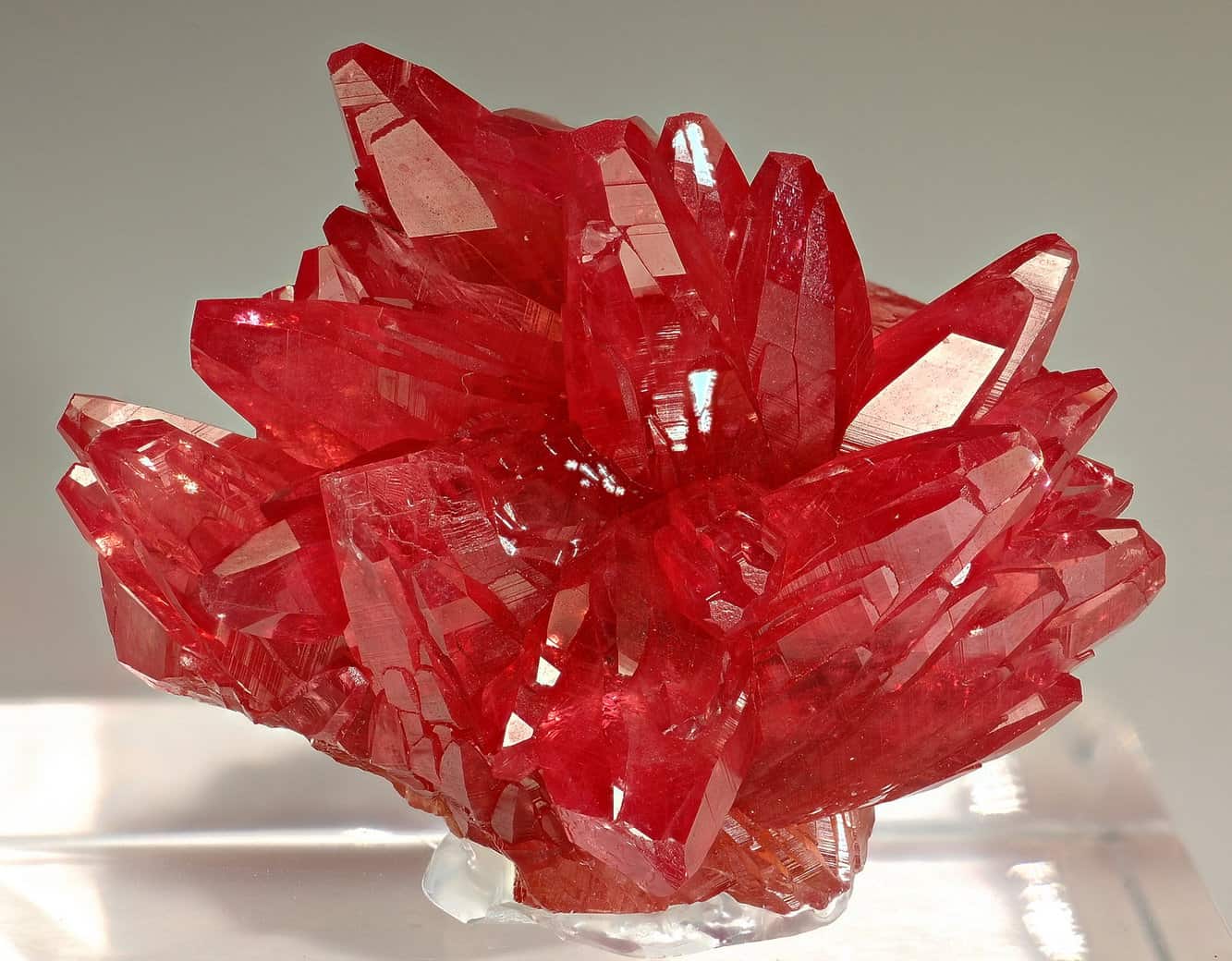 RUBY. (Heb. peninim), only in plural (Lam. 4:7). The ruby was one of the stones in the high priest’s breastplate (Ex. 28:17). A comparison is made between the value of wisdom and rubies (Job 28:18; Prov. 3:15; 8:11). The price of a virtuous woman is said to be “far above rubies” (Prov. 31:10). The exact meaning of the Hebrew word is uncertain. Some render it “red coral;” others, “pearl” or “mother-of-pearl.”
RUFUS. Red, the son of Simon the Cyrenian (Mark 15:21), whom the Roman soldiers compelled to carry the cross on which our Lord was crucified. Probably it is the same person who is again mentioned in Rom. 16:13 as a disciple at Rome, whose mother also was a Christian held in esteem by the apostle. Mark mentions him along with his brother Alexander as persons well known to his readers (Mark 15:21).
RUHAMAH. Having obtained mercy, a symbolical name given to the daughter of Hosea (2:1).
RUMAH. Elevation, probably the same as Arumah (Judg. 9:41; 2 Kings 23:36), near Shechem. Others identify it with Tell Rumeh, in Galilee, about 6 miles north of Nazareth.
RUTH. A friend, a Moabitess, the wife of Mahlon, whose father, Elimelech, had settled in the land of Moab. On the death of Elimelech and Mahlon, Naomi came with Ruth, her daughter-in-law, who refused to leave her, to Bethlehem, the old home from which Elimelech had migrated. There she had a rich relative, Boaz, to whom Ruth was eventually married. She became the mother of Obed, the grandfather of David. Thus Ruth, a Gentile, is among the maternal progenitors of our Lord (Matt. 1:5). The story of “the gleaner Ruth illustrates the friendly relations between the good Boaz and his reapers, the Jewish land system, the method of transferring property from one person to another, the working of the Mosaic law for the relief of distressed and ruined families; but, above all, handing down the unselfishness, the brave love, the unshaken trustfulness of her who, though not of the chosen race, was, like the Canaanitess Tamar (Gen. 38:29; Matt. 1:3) and the Canaanitess Rahab (Matt. 1:5), privileged to become the ancestress of David, and so of ‘great David’s greater Son’” (Ruth 4:18-22).
RUTH, THE BOOK OF. Was originally a part of the Book of Judges, but it now forms one of the twenty-four separate books of the Hebrew Bible. The history it contains refers to a period perhaps about one hundred and twenty-six years before the birth of David. It gives (1.) an account of Naomi’s going to Moab with her husband, Elimelech, and of her subsequent return to Bethlehem with her daughter-in-law; (2.) the marriage of Boaz and Ruth; and (3.) the birth of Obed, of whom David sprang. The author of this book was probably Samuel, according to Jewish tradition. “Brief as this book is, and simple as is its story, it is remarkably rich in examples of faith, patience, industry, and kindness, nor less so in indications of the care which God takes of those who put their trust in him.”